
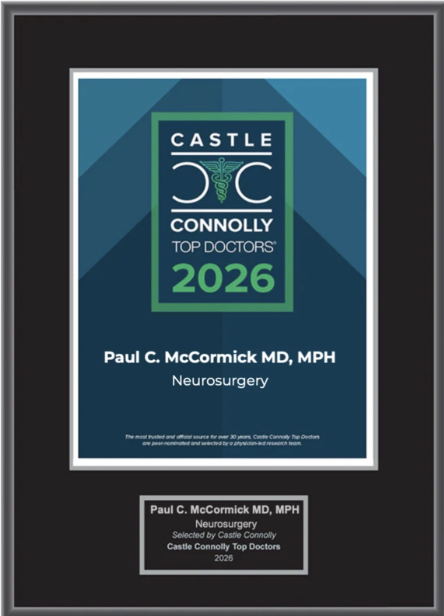
Dr. McCormick named as one of Castle Connolly’s Top United States and New York Doctors/Neurosurgery for 25 consecutive years.
| Header | Text |
| Summary | Rheumatoid = inflammation and pain in joints, muscles, or soft tissue Rheumatoid arthritis (RA) is a disease that causes painful and stiff joints. RA can affect any joint in the body. At The Spine Hospital at The Neurological Institute of New York, we specialize in treating RA of the spine. RA is an autoimmune disorder, which means the damage is caused when the immune system mistakenly attacks healthy tissue. RA differs from osteoarthritis in that osteoarthritis (often just called “arthritis”) results from wear and tear on the joints. RA may start in one part of the body and progress to others. There is not a universal pattern as to how the disease progresses, what joints will be affected, and the severity of the involvement of each joint. When RA affects the spine, it is more common for the cervical spine (neck) to be affected than other portions of the spine. RA can affect the cervical spine as early as the first two years of the disease’s onset. Sometimes it affects the spine much later, and sometimes it never involves the spine at all. |
| Symptoms | RA in the spine can cause the following symptoms:
In progressive forms of RA, the deterioration of the joints in the spine can result in the spinal cord and/or spinal nerve roots becoming compressed (pinched). The symptoms of compression vary depending on the portion of the spine that is affected. These symptoms may include:
Patients with severe RA typically have multiple affected joints in the hands, arms, legs, and feet. Inflammation of the eyes, mouth and lungs can also develop. |
| Causes and Risk Factors | Although the cause is unknown, it is suspected genes and environment play a role in developing RA. There is research to support the involvement of certain genes, called HLA class II genes, in the development of RA. Environmental factors may include smoking, exposure to certain bacteria or viruses. RA can affect anyone, but it is more common in women. It usually presents in middle age and is most common in older people. |
| Tests and Diagnosis | A physician may perform the following tests to confirm the diagnosis of RA:
|
| Treatments | Although there is no cure, there are many treatments available to help reduce symptoms of RA. A doctor may prescribe the following medications to provide relief of symptoms and improve joint function in the spine:
In rare cases, surgery may be required when RA has greatly affected the joints in the spine. If the deterioration of the joints in the spine has led to compression of the spinal cord or instability of the spine, the goal of surgical intervention is to decompress the spinal cord and stabilize the spine. The surgeon may perform a laminectomy to remove the lamina, which is the bone that covers the spinal canal. Removing the lamina makes room for the spinal cord. In some cases, the surgeon may perform a spinal fusion to ensure the spinal column is stable after surgery. During a spinal fusion, the surgeon may place new bone and allow the bones to fuse together (fusion). The doctor will discuss the available treatment options and will tailor the treatment to each patient and situation. |
| Preparing for Your Appointment | Drs. Paul C. McCormick, Michael G. Kaiser, Alfred T. Ogden, Christopher E. Mandigo and Patrick C. Reid at The Spine Hospital at The Neurological Institute of New York are experts in treating rheumatoid arthritis. They can also offer you a second opinion. |
Helpful Surgery Overviews
Dr. McCormick will choose the treatment method specific to each patient and situation. Some of the condition’s treatment options may be listed below.
Recent News
Dr. McCormick named as one of Castle Connolly’s Top United States and New York Doctors/Neurosurgery for 25 consecutive years.
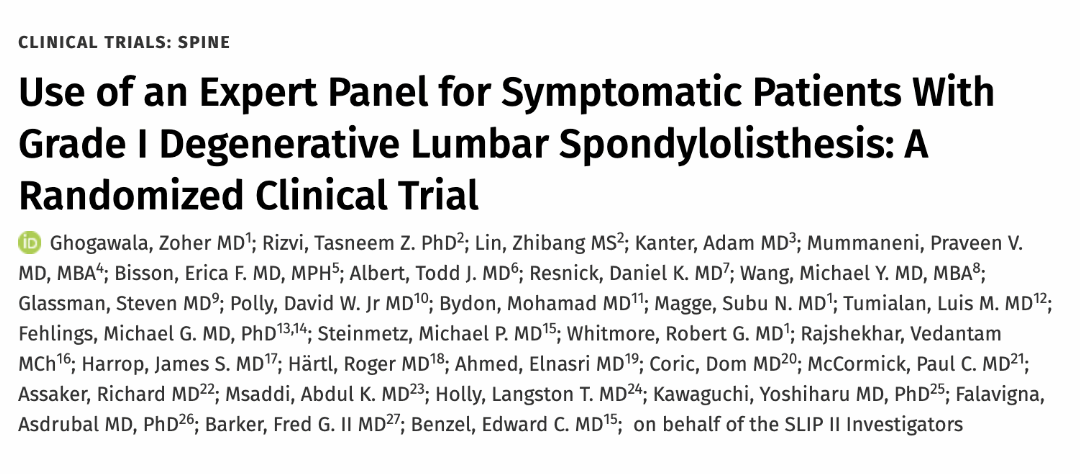
Dr. McCormick participated as both a member of the expert panel as well as a co-author of recently published randomized study on the treatment of grade 1 degenerative spondylolisthesis. This condition commonly occurs in adult patients and is subject to numerous types...
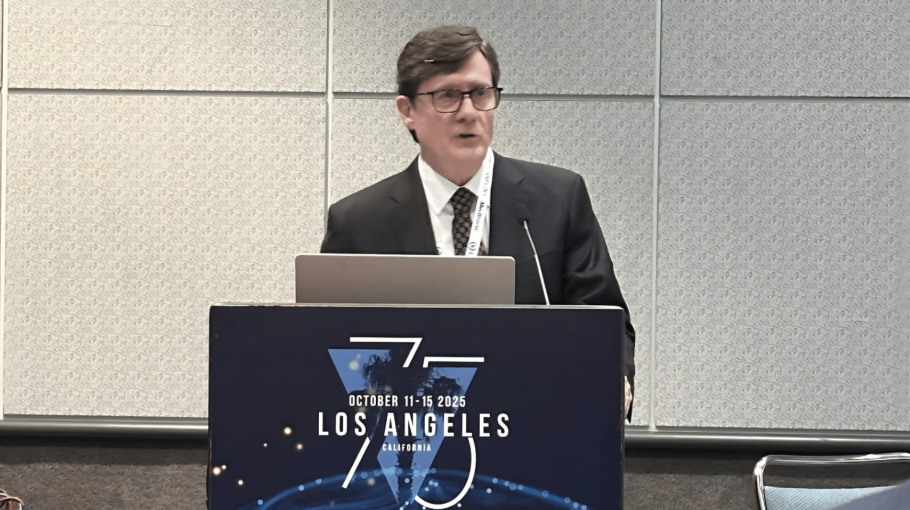
Dr. McCormick was invited to present his experience on the evaluation and microsurgical management of intramedullary spinal cord tumors. Dr. McCormick described his techniques and illustrated on video the safe and complete microsurgical resection of both an...