
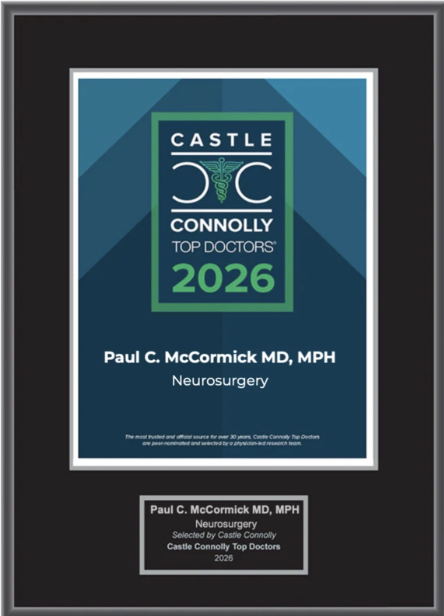
Dr. McCormick named as one of Castle Connolly’s Top United States and New York Doctors/Neurosurgery for 25 consecutive years.
| Header | Text |
| Summary | Neurogenic = arising in the nervous system Neurogenic claudication results from compression of the spinal nerves in the lumbar (lower) spine. It is sometimes known as pseudoclaudication. Neurogenic claudication is different from vascular claudication, sometimes simply called claudication, which is caused by impaired blood flow to the leg muscles. |
| Symptoms | The symptoms of neurogenic claudication can include pain, tingling, or cramping in the lower back and one or both legs, hips, and buttocks. Weakness or heaviness in the legs may also occur. These symptoms are especially present when standing upright or walking and usually relieved with leaning forward or sitting down. |
| Causes and Risk Factors | Neurogenic claudication is usually caused by spinal stenosis (narrowing of the spinal canal) in the lumbar spine (lower back). The narrowing of the spinal canal is generally caused by wear and tear and arthritic changes in the lower spine. These changes include bulging discs, thickening of ligaments, and overgrowth of bone spurs, especially at spinal facet joints. Stenosis can compress the nerve roots that control sensation and movement in the lower body. This compression causes the pain, tingling, or cramping. The pain is usually worse when standing and walking because in a fully upright posture, the spinal canal naturally narrows, placing additional pressure on the nerve roots. The pain can often be temporarily relieved by sitting down or flexing forward– in these postures, the spinal canal naturally expands a bit, relieving the excess pressure on the nerve roots. |
| Tests and Diagnosis | A full physical exam and detailed interview will help a physician determine the type of pain and its origin. Certain symptoms can help a physician distinguish neurogenic claudication from vascular claudication–for example, the pain of vascular claudication is often relieved simply by rest, while pain due to neurogenic claudication is best relieved by bending forward or sitting down. Various imaging studies can confirm a diagnosis of neurogenic claudication and help determine the if the cause is spinal stenosis. These studies include:
|
| Treatments | In general, the goal of surgical treatment is to decompress (remove the pressure from) the nerve roots in the lumbar spine. If the compression results from a herniated disc, a microdiscectomy (procedure that uses small incisions with a tiny video camera for viewing) may provide relief. In other cases, a laminectomy (removal of part of a bone) may be necessary. Dr. McCormick and his team can determine the best treatment for each case. |
| Preparing for Your Appointment | Drs. Paul McCormick, Michael G. Kaiser, Peter D. Angevine, Alfred T. Ogden, Christopher E. Mandigo, Patrick C. Reid and Richard C.E. Anderson (Pediatric) are experts in treating neurogenic claudication. Each can also offer you a second opinion. |
Helpful Surgery Overviews
Dr. McCormick will choose the treatment method specific to each patient and situation. Some of the condition’s treatment options may be listed below.
Recent News
Dr. McCormick named as one of Castle Connolly’s Top United States and New York Doctors/Neurosurgery for 25 consecutive years.
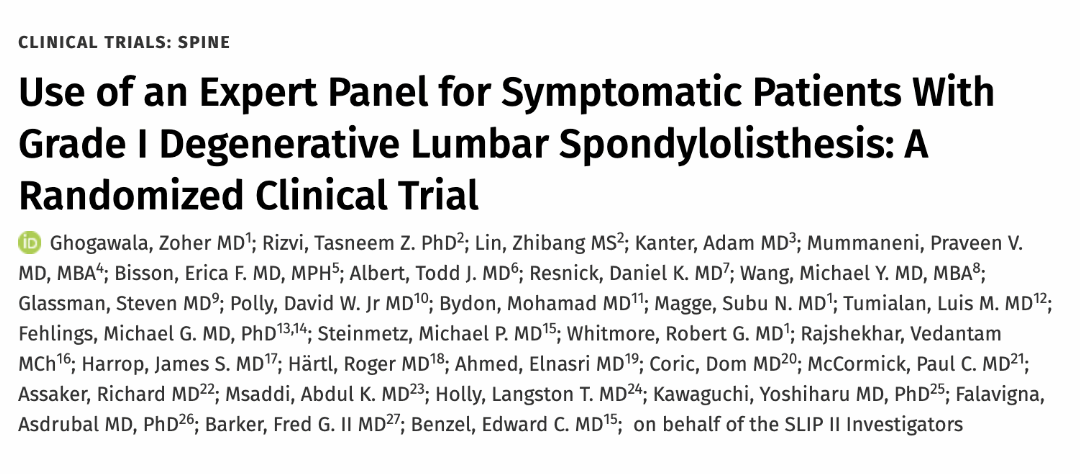
Dr. McCormick participated as both a member of the expert panel as well as a co-author of recently published randomized study on the treatment of grade 1 degenerative spondylolisthesis. This condition commonly occurs in adult patients and is subject to numerous types...
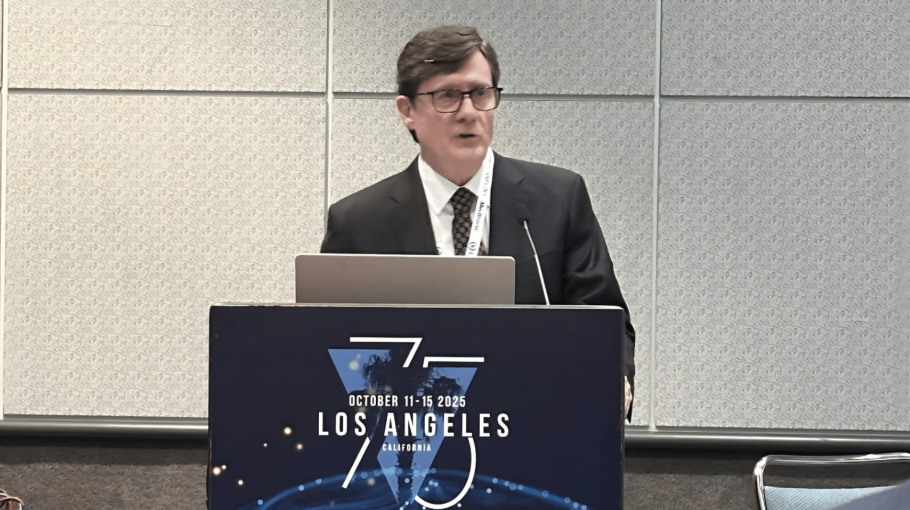
Dr. McCormick was invited to present his experience on the evaluation and microsurgical management of intramedullary spinal cord tumors. Dr. McCormick described his techniques and illustrated on video the safe and complete microsurgical resection of both an...