
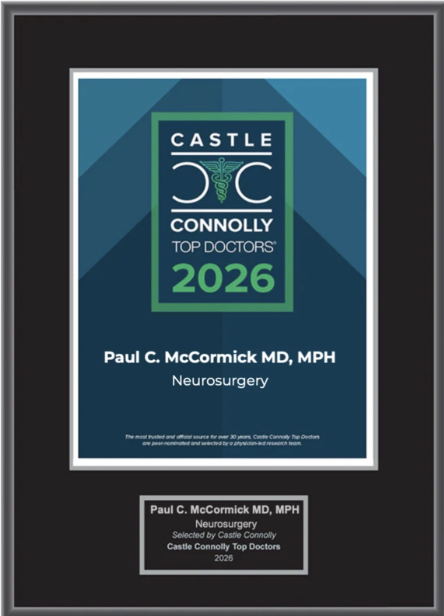
Dr. McCormick named as one of Castle Connolly’s Top United States and New York Doctors/Neurosurgery for 25 consecutive years.
| Header | Text |
| Summary | An osteoblastoma is a benign tumor of any bone. At The Spine Hospital at The Neurological Institute of New York, we specialize in spinal osteoblastomas. Osteoblastomas arise from osteoblasts, one of the two main cell types present in all bones. Osteoblasts form new bone, while osteoclasts break down existing bone. Osteoblasts and osteoclasts work in concert to repair and remodel bones throughout a person’s lifetime. In an osteoblastoma, however, the osteoblasts malfunction. They proliferate in an uncontrolled manner and haphazardly produce new bone tissue. The bone tissue produced by an osteoblastoma is abnormal and much weaker than normal bone. Osteoblastomas can grow to be quite large. About 40% of osteoblastomas occur in the vertebrae, or bones of the spine. |
| Symptoms | Though benign (noncancerous), spinal osteoblastomas can cause severe symptoms. |
| Causes and Risk Factors | Osteoblastoma is a rare tumor, and its causes are not yet understood. It is more common in males than females, and equally common across races. Most people diagnosed with osteoblastoma are in the second and third decades of life. |
| Tests and Diagnosis | Diagnosing osteoblastoma can be a challenge. Osteoblastomas are very similar to the more aggressive osteosarcoma and the less aggressive osteoid osteoma. Each tumor type follows a different course and is treated differently. In many cases, the diagnosis of osteoblastoma is suggested by the tumor location, size, and appearance on X-ray. A definitive diagnosis usually requires a biopsy, a procedure in which part of the tumor is removed for study in a laboratory. CT (computed tomography) scans use a combination of X-rays and computer technology to produce detailed images of bones and soft tissues. CT scans can localize the tumor more precisely than a plain X-ray, which is helpful in surgical planning. MR (magnetic resonance) scans use magnets, radio waves, and computer technology to produce images of organs and tissues like the brain and spinal cord. These scans can reveal the tumor’s involvement with nearby nerve roots or other soft tissues. |
| Treatments | Surgery is the treatment of choice for osteoblastoma. The goal of surgery is complete excision of the tumor. This is a more difficult process for osteoblastomas in the spine than in other locations, as it may not be possible to safely remove the entire tumor. However, the outcome for most patients is very good. Most osteoblastomas occur in the vertebral arch, at the posterior (rear) of the spine. A laminectomy is performed to remove the tumor. Instrumented spinal fusion may need to be performed in some patients to maintain spinal stability. |
| Preparing for Your Appointment | Drs. Paul C. McCormick, Michael G. Kaiser, Alfred T. Ogden, Christopher E. Mandigo, Patrick C. Reid and Richard C.E. Anderson (Pediatric) are experts in treating osteoblastomas. They can also offer you a second opinion. |
Helpful Surgery Overviews
Dr. McCormick will choose the treatment method specific to each patient and situation. Some of the condition’s treatment options may be listed below.
Recent News
Dr. McCormick named as one of Castle Connolly’s Top United States and New York Doctors/Neurosurgery for 25 consecutive years.
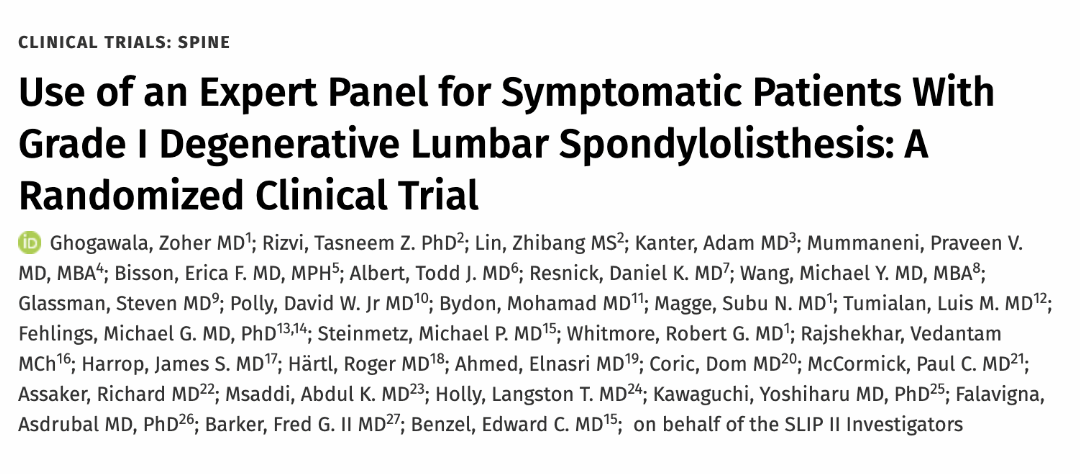
Dr. McCormick participated as both a member of the expert panel as well as a co-author of recently published randomized study on the treatment of grade 1 degenerative spondylolisthesis. This condition commonly occurs in adult patients and is subject to numerous types...
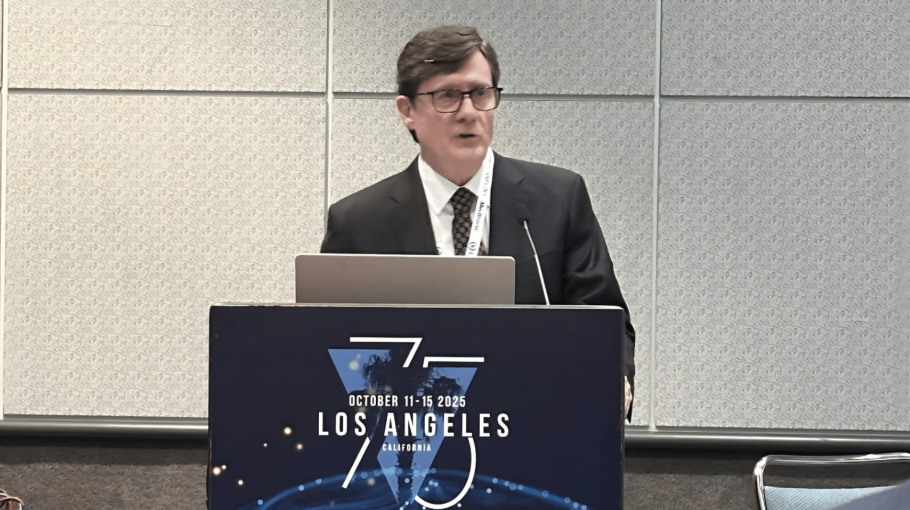
Dr. McCormick was invited to present his experience on the evaluation and microsurgical management of intramedullary spinal cord tumors. Dr. McCormick described his techniques and illustrated on video the safe and complete microsurgical resection of both an...