
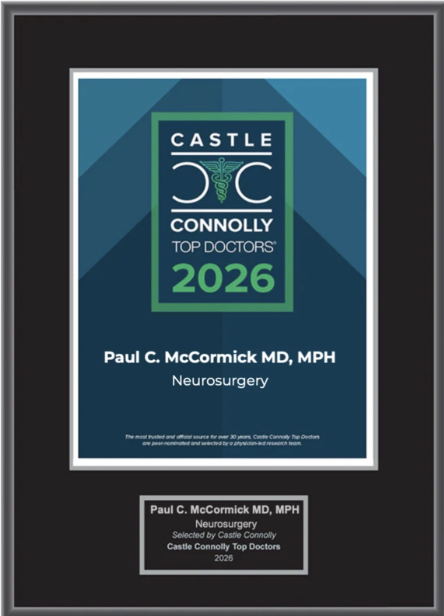
Dr. McCormick named as one of Castle Connolly’s Top United States and New York Doctors/Neurosurgery for 25 consecutive years.
| Header | Text |
| Summary | Osteomyelitis is an infection in the bone. Osteomyelitis can occur in any bone. In children, it is most common in the long bones of the legs and upper arms. In adults, osteomyelitis most commonly affects the bones of the spine (the vertebrae). At The Spine Hospital at The Neurological Institute of New York, we specialize in osteomyelitis in the spine, or vertebral osteomyelitis. Most cases of vertebral osteomyelitis occur in the lumbar spine (lower back). The next common site is in the thoracic spine (mid- and upper back), followed by the cervical spine (neck). Osteomyelitis may also occur in the sacrum (base of the spine). The infection can be caused by bacteria, fungi, or other organisms. Osteomyelitis can be either acute (short-term) or chronic (long-term). |
| Symptoms | Symptoms associated with vertebral osteomyelitis will depend on the location and severity of the infection. It may cause any of the following symptoms:
Patients with chronic osteomyelitis may report bone pain, tenderness, and draining abscesses around infected bone for long periods of time (months to years). Rarely, vertebral osteomyelitis may affect the nerves in the spine. If the infection travels into the spinal canal, this can result in an epidural abscess. Depending on how extensive the infection is and what portion of the spine is involved, additional conditions and symptoms may develop. If an epidural abscess is present in the cervical (neck) or thoracic (upper back) portions of the spine, paralysis can occur in the legs or in both the arms and legs. If the epidural abscess is present in the lumbar (lower) portion of the spine, it can result in cauda equina syndrome. Cauda equina syndrome results from the compression (squeezing) of the cauda equina–the sac of nerves and nerve roots at the base of the spinal cord. It is a rare but serious disorder, and a medical emergency. |
| Causes and Risk Factors | Osteomyelitis is commonly caused by bacteria such as Staphylococcus aureus and Pseudomonas aeruginosa. Osteomyelitis can also be caused by fungus and mycobacteria. Osteomyelitis can develop in a variety of ways:
Risk factors for developing osteomyelitis include the following:
|
| Tests and Diagnosis | If a patient presents with symptoms associated with osteomyelitis, the surgeon may order the following tests:
|
| Treatments | The doctors at The Spine Hospital at The Neurological Institute of New York will tailor the treatment to each patient and situation. A surgical procedure known as a biopsy may be needed to determine what organism is causing the infection. The doctor will prescribe antibiotics or antifungals to help kill the specific organisms causing the infection. Typically the antibiotics will need to be taken for about 4-6 weeks, and are usually given through a vein (intravenously, or IV) at home. In some situations, additional surgery may be required:
In certain cases, the surgeon may need to perform a spinal fusion to ensure the spinal column is stable after surgery. During a spinal fusion, the surgeon may replace the infected bone with new, healthy bone, and allow the bones to fuse together (fusion). |
| Preparing for Your Appointment | Drs. Paul C. McCormick, Michael G. Kaiser, Peter D. Angevine, Alfred T. Ogden, Christopher E. Mandigo, Patrick C. Reid and Richard C.E. Anderson (Pediatric) at The Spine Hospital at the Neurological Institute of New York are experts in treating spinal osteomyelitis. They can also offer you a second opinion. |
Helpful Surgery Overviews
Dr. McCormick will choose the treatment method specific to each patient and situation. Some of the condition’s treatment options may be listed below.
Recent News
Dr. McCormick named as one of Castle Connolly’s Top United States and New York Doctors/Neurosurgery for 25 consecutive years.
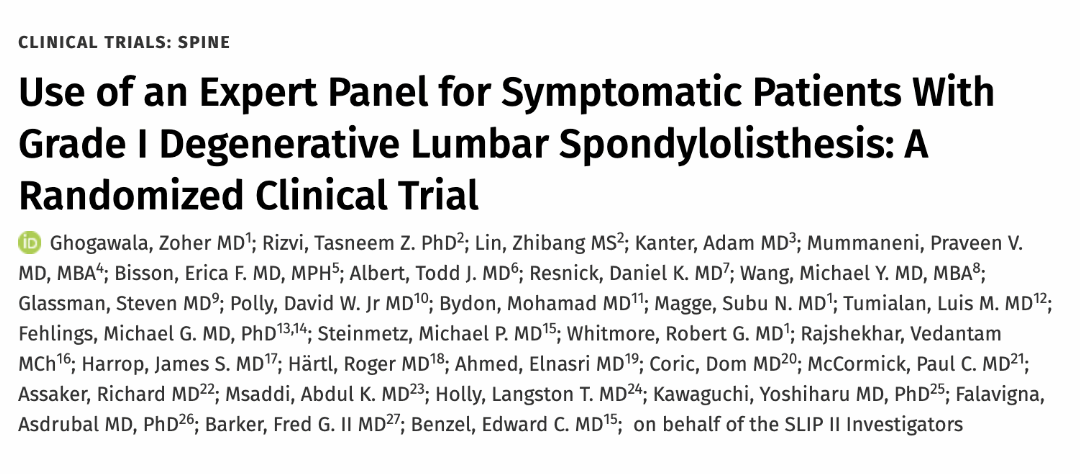
Dr. McCormick participated as both a member of the expert panel as well as a co-author of recently published randomized study on the treatment of grade 1 degenerative spondylolisthesis. This condition commonly occurs in adult patients and is subject to numerous types...
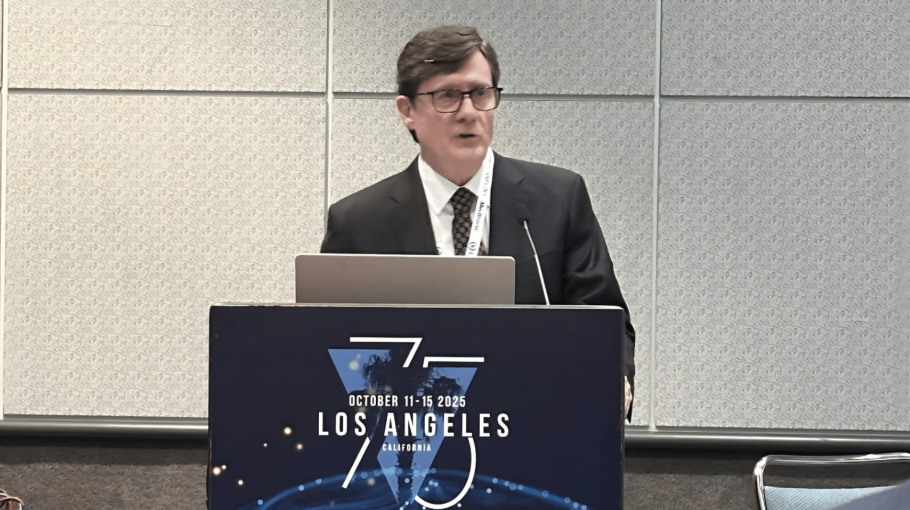
Dr. McCormick was invited to present his experience on the evaluation and microsurgical management of intramedullary spinal cord tumors. Dr. McCormick described his techniques and illustrated on video the safe and complete microsurgical resection of both an...