
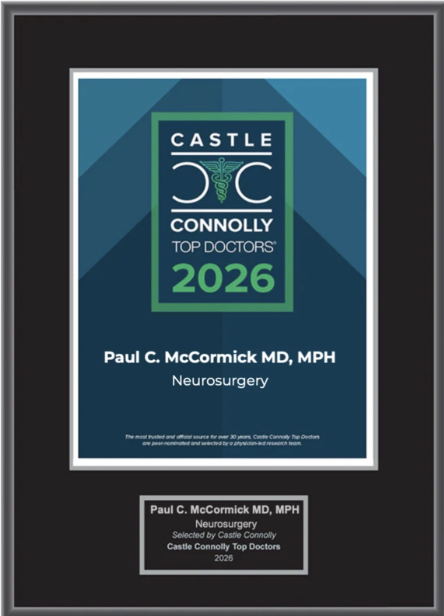
Dr. McCormick named as one of Castle Connolly’s Top United States and New York Doctors/Neurosurgery for 25 consecutive years.
| Header | Text |
| Summary | Spinal cord = The bundle of nerves that connect the brain to the rest of the body The spinal cord is the bundle of nerves and other tissue that connects brain to body. It carries instructions about movement from the brain, and information about sensation to the brain. It runs from the base of the brain down through the cervical spine (in the neck) and the thoracic spine (in the upper and mid-back). There it ends–the spinal cord does not actually run the entire length of the spine. After the spinal cord ends, in the lumbar (lower) spine, is the cauda equina: the bundle of nerve roots that branch out to the legs. Acute spinal cord injury (SCI) is caused by a trauma to the cervical or thoracic spine, where the spinal cord is located. SCI can disrupt movement, sensation, and body organ function below the level of the injury. Spinal cord injuries can be either complete or incomplete.
Although there is currently no cure for spinal cord injury, the outlook for people affected by SCI has improved dramatically over the last few decades. New treatments, specialized rehabilitation training, and novel technologies may all improve the life experience of people with spinal cord injury. Worldwide, scientists are researching ways to someday repair the injured spinal cord. |
| Symptoms | Symptoms of a spinal cord injury vary by location and severity of the injury.
Symptoms may include:
Symptoms do not always begin immediately. They can develop gradually after an injury if bleeding or swelling put pressure on the spinal cord. Any person who has experienced a dangerous fall or motor vehicle accident should be evaluated for a spinal injury. Prompt treatment may help control this type of gradual damage. |
| Causes and Risk Factors | The most common causes of spinal cord injury are car accidents, falls, gunshot or knife wounds, and sports accidents. Most spinal cord injuries occur in young men between the ages of 16 to 30. |
| Tests and Diagnosis | After a trauma, doctors will ask questions about what happened and conduct a careful examination. If patients are conscious, doctors may test patients’ ability to move different parts of the body, and their ability to feel strong or light sensations in different parts of the body. These tests help determine whether movement and sensation have been affected by the injury. Doctors will ask about any pain in the neck or back.
|
| Treatments | Specific treatment for a spinal cord injury varies by case. The type of treatment depends on a variety of factors, which may include:
In some cases, surgery may be necessary to stabilize fractured bones, decompress (relieve the pressure on) the injured area, and to manage any other injuries. However, there is not yet a way to reverse damage to an injured spinal cord. Even so, as the body heals from the injury, some patients may recover some spinal cord function up to six or twelve months after injury. Recovery from a spinal cord injury requires long-term hospitalization and rehabilitation. An interdisciplinary team of physicians, nurses, therapists (physical, occupational, or speech), and other specialists work together with each patient affected by a spinal cord injury. New types of rehabilitation, new technologies, and other treatments are constantly being developed and improved. And around the world, researchers are working to find methods of healing spinal cord injuries. |
Drs. Paul C. McCormick, Michael G. Kaiser, Peter D. Angevine, Alfred T. Ogden, Christopher E. Mandigo, Patrick C. Reid and Richard C.E. Anderson (Pediatric) are experts in treating spinal cord injuries. They can also offer you a second opinion. |
Helpful Surgery Overviews
Dr. McCormick will choose the treatment method specific to each patient and situation. Some of the condition’s treatment options may be listed below.
Recent News
Dr. McCormick named as one of Castle Connolly’s Top United States and New York Doctors/Neurosurgery for 25 consecutive years.
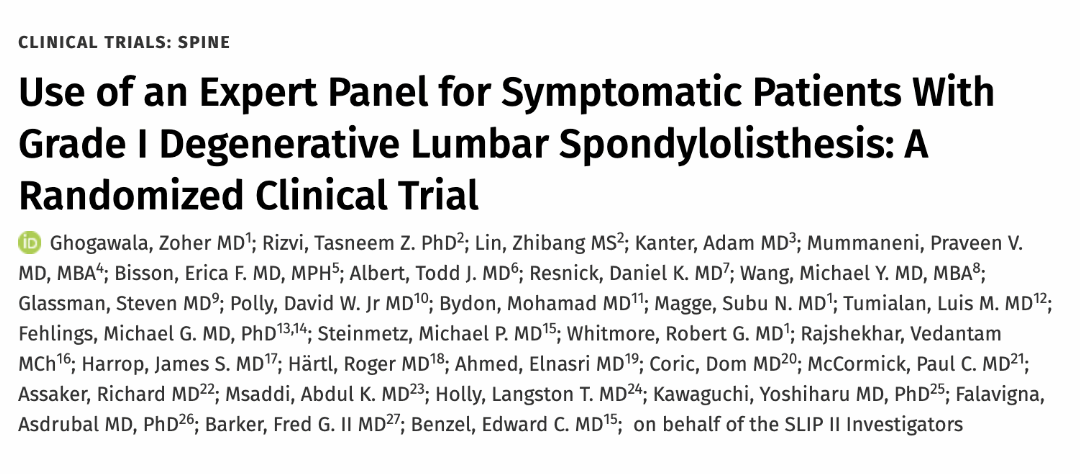
Dr. McCormick participated as both a member of the expert panel as well as a co-author of recently published randomized study on the treatment of grade 1 degenerative spondylolisthesis. This condition commonly occurs in adult patients and is subject to numerous types...
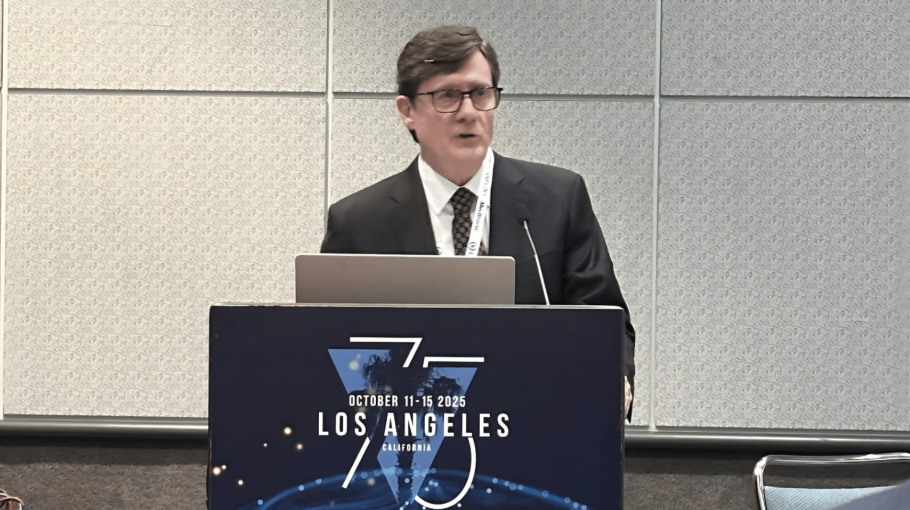
Dr. McCormick was invited to present his experience on the evaluation and microsurgical management of intramedullary spinal cord tumors. Dr. McCormick described his techniques and illustrated on video the safe and complete microsurgical resection of both an...