
Dr. McCormick named as one of Castle Connolly’s Top United States and New York Doctors/Neurosurgery for 25 consecutive years.
| Header | Text |
| Overview | This page provides a general summary of spinal deformity, a quick glossary of related terms, and common signs and symptoms, diagnostic tests, and treatment considerations. |
| Glossary |
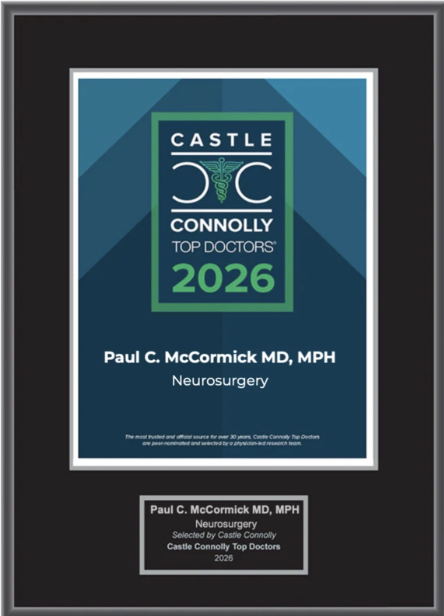
If deformities in the sagittal plane prevent the individual from achieving an upright posture with the head aligned over the hips, the result is sagittal imbalance.
|
| Signs and Symptoms | Signs are observable indications of a condition. Signs can be seen or felt by people other than the patient. Signs of scoliosis may include a difference in shoulder or hip height, a difference in the way the arms hang beside the body, a spine that is visibly off-center, or a head that appears off-center with the body. Signs of sagittal imbalance may include a stooped forward posture, a hump in the back, or an inability to stand up straight. Symptoms can be felt by the person with the condition. Symptoms of scoliosis vary: most cases of infantile, juvenile and adolescent scoliosis, for example, produce no symptoms. Degenerative scoliosis is often accompanied by pain. Symptoms of sagittal imbalance range from mild discomfort to severe pain. Spinal deformities also have the capacity to interfere with the spinal cord or nerve roots. Stretch or compression of the spinal cord or nerve roots produces symptoms that may include pain, weakness, numbness, or tingling that travel down an arm or a leg. |
| Tests and Diagnosis | To establish the existence and extent of spinal deformity, the following tests may be useful:
|
| Treatments | For the most part, nonoperative treatments are recommended before surgery is considered. Nonoperative treatments include pain medications, physical therapy (including gait and posture training), and certain braces. Surgery is considered if:
The goals of surgery are to relieve symptoms and to align and stabilize the spine. However, since spinal deformity varies from patient to patient, no two surgical treatments will be the same. Our experienced surgeons can determine the best treatment for each patient and each situation. Aligning and stabilizing the spine are complex procedures. Spinal alignment must be achieved from all angles, and keeping the spine in its stable position often requires implanting hardware such as screws and rods. Read more about deformity correction and stabilization here. If the deformity has resulted in compression of the spinal cord or spinal nerves, the surgeon may perform a decompression surgery. A laminectomy is one common type of decompression surgery. In this procedure, the surgeon removes a section of bone called the lamina at the back of the vertebra. Removing the lamina provides extra space for the spinal cord and allows it to function properly. For a detailed explanation of surgical procedures that may be required to treat a specific spinal deformity, refer to that condition’s individual page. |
Drs. Paul C. McCormick, Peter D. Angevine, Christopher E. Mandigo, Patrick C. Reid and Richard C.E. Anderson (Pediatric) are experts in treating spinal deformities. Each can also offer you a second opinion. |
Helpful Surgery Overviews
Dr. McCormick will choose the treatment method specific to each patient and situation. Some of the condition’s treatment options may be listed below.
Recent News
Dr. McCormick named as one of Castle Connolly’s Top United States and New York Doctors/Neurosurgery for 25 consecutive years.
Dr. McCormick participated as both a member of the expert panel as well as a co-author of recently published randomized study on the treatment of grade 1 degenerative spondylolisthesis. This condition commonly occurs in adult patients and is subject to numerous types...
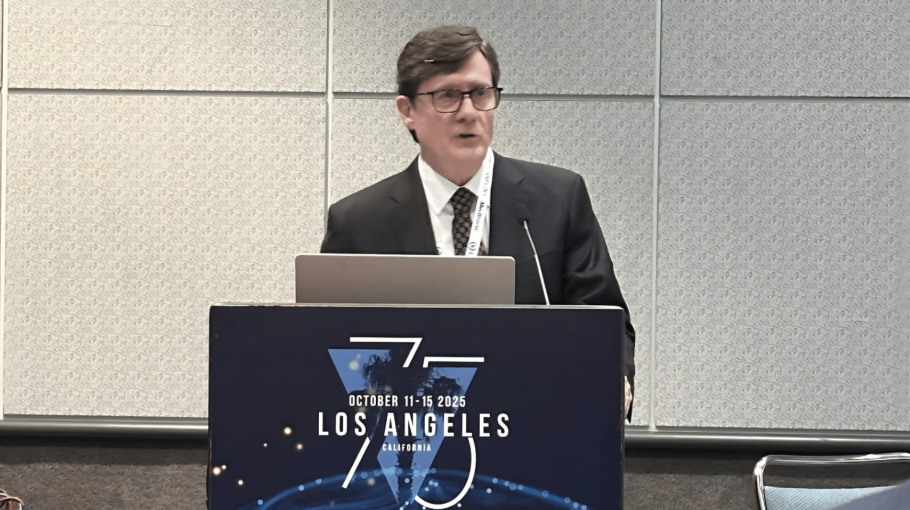
Dr. McCormick was invited to present his experience on the evaluation and microsurgical management of intramedullary spinal cord tumors. Dr. McCormick described his techniques and illustrated on video the safe and complete microsurgical resection of both an...