
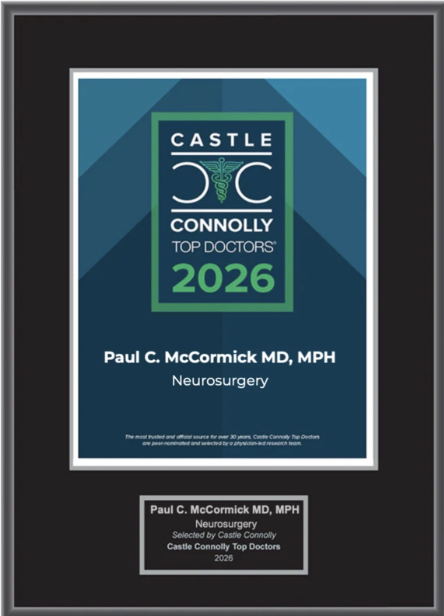
Dr. McCormick named as one of Castle Connolly’s Top United States and New York Doctors/Neurosurgery for 25 consecutive years.
| Header | Text |
| Summary | Spinal = having to do with the spine 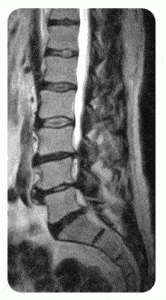 MRI of Lumbar Spinal Stenosis Multiple level disc bulging and spinal canal narrowing has obstructed the flow of the clear white spinal fluid within the lower canal.
Spinal stenosis is a narrowing of the spinal canal, the bony structure that encloses the spinal cord and the nerve roots. Spinal stenosis usually develops gradually due to age-related spinal degeneration. It is most common in people over 50 years of age, and is widely recognized as a significant source of disability. Most cases of spinal stenosis occur in the lumbar spine (lower back). However, stenosis may also occur in the cervical spine (neck). Rarely, spinal stenosis occurs in the thoracic spine (mid- and upper back). |
| Symptoms | Symptoms of spinal stenosis are produced when the narrowing spinal canal compresses the spinal cord or nerve roots. Specific symptoms depend on the location and severity of the stenosis. Cervical spinal stenosis may cause the following symptoms:
Lumbar spinal stenosis may cause the following symptoms:
|
| Causes and Risk Factors | As many as 90% of reported cases of spinal stenosis result from degenerative changes that occur with aging. This degeneration, called spondylosis, can lead to bone spurs that may narrow the spinal canal. Other possible contributors to spinal stenosis include the thickening of ligaments within the spinal canal; the degeneration, herniation or bulging of intervertebral discs; and the formation of synovial cysts (fluid-filled sacs in the joints). |
| Tests and Diagnosis | The diagnosis of spinal stenosis begins with a complete history and physical examination. The doctor will determine what symptoms exist, what makes them better or worse, and how long they have been present. A neurological examination that demonstrates abnormalities in the strength, sensation and reflexes of particular parts of the body may provide objective evidence of spinal cord or nerve root compression caused by spinal stenosis.
|
| Treatments | Before surgery is considered, a doctor will typically recommend nonoperative treatments. These measures may include anti-inflammatory medications, physical therapy, weight control, or pain management techniques such as epidural spinal injections. A doctor or physical therapist may provide an exercise program or instruction on proper posture. When nonoperative treatments don’t help or stop working, surgery often provides relief. For patients with persistent neurogenic claudication, a decompressive lumbar laminectomy may be recommended. In a laminectomy, a surgeon removes a section of vertebral bone called the lamina. This makes more room for the spinal cord and nerve roots in the spinal canal. Other surgeries may be recommended to remove portions of the joints, disc, or ligaments that compress the spine or nerve roots. The surgeon assesses the likely effect of any such surgery on the stability of the spine. If the spine is or may become unstable, a stabilization and fusion procedure may be considered. |
| Preparing for Your Appointment | Drs. Paul C. McCormick, Michael G. Kaiser, Peter D. Angevine, Alfred T. Ogden, Christopher E. Mandigo, Patrick C. Reid and Richard C.E. Anderson (Pediatric) are experts in treating spinal stenosis. They can also offer you a second opinion. |
Helpful Surgery Overviews
Dr. McCormick will choose the treatment method specific to each patient and situation. Some of the condition’s treatment options may be listed below.
Recent News
Dr. McCormick named as one of Castle Connolly’s Top United States and New York Doctors/Neurosurgery for 25 consecutive years.
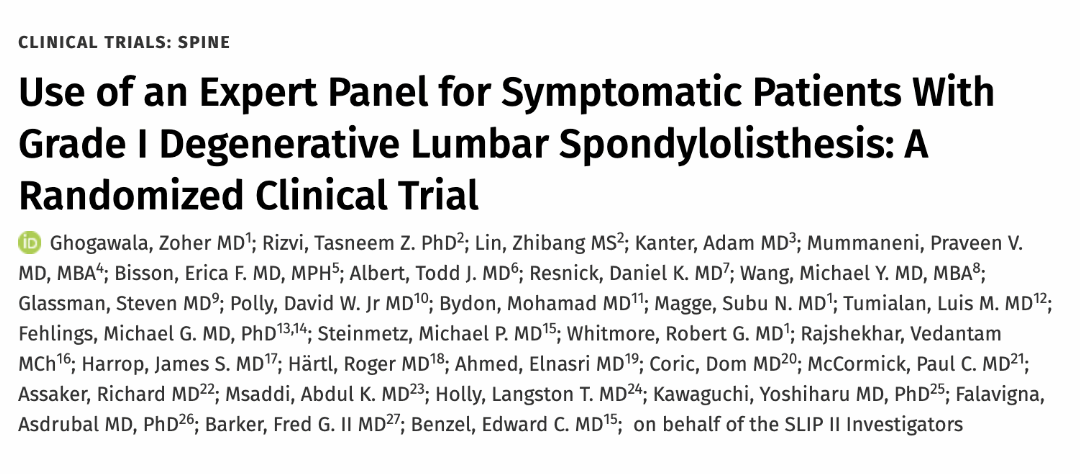
Dr. McCormick participated as both a member of the expert panel as well as a co-author of recently published randomized study on the treatment of grade 1 degenerative spondylolisthesis. This condition commonly occurs in adult patients and is subject to numerous types...
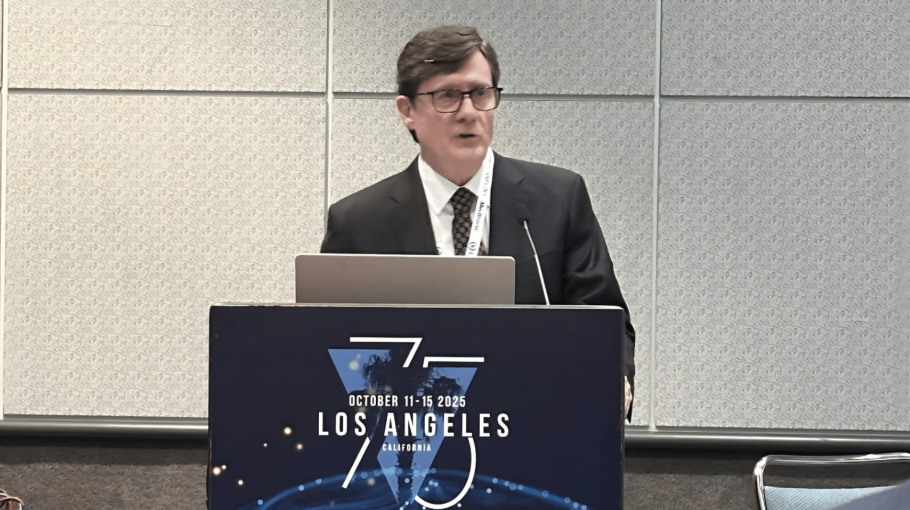
Dr. McCormick was invited to present his experience on the evaluation and microsurgical management of intramedullary spinal cord tumors. Dr. McCormick described his techniques and illustrated on video the safe and complete microsurgical resection of both an...