
Dr. McCormick named as one of Castle Connolly’s Top United States and New York Doctors/Neurosurgery for 25 consecutive years.
| Header | Text |
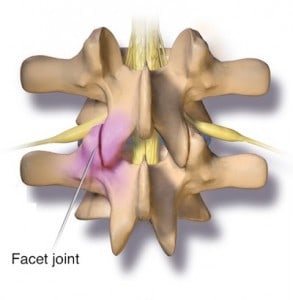
| Summary | Synovial = having to do with a type of joint that is lubricated by synovial fluid Synovial cysts are abnormal fluid-filled sacs in joints in the spine. These cysts are benign, which means they are not cancerous. Synovial cysts typically develop as a result of degenerative changes that occur with aging. They can be found throughout the spine, but are most common in the lumbar region (low back). The spine has many joints. Synovial cysts develop in the facet (fass-ET) joints of the spine. These are the joints between the bony projections at the back of the vertebrae.
Image credit: Blausen.com staff. “Blausen gallery 2014”. Wikiversity Journal of Medicine. DOI:10.15347/wjm/2014.010. ISSN 20018762. – Own work, CC BY 3.0. |
| Symptoms | Symptoms depend on the size and location of the cyst. Some patients may not experience any symptoms. However, some patients will experience back and leg pain that is better when sitting and worse when standing and walking. This is because in a fully upright posture, the spinal canal naturally narrows, placing additional pressure on the spinal cord and nerve roots. The spinal canal naturally expands a bit when in a seated or flexed forward posture often relieving the excess pressure from spinal stenosis. If the synovial cysts are large enough, they may cause spinal stenosis, or narrowing of the spinal canal. In spinal stenosis, the spinal canal becomes too narrow to allow the spinal cord and surrounding spinal nerves to move freely. As a result, patients may experience numbness, tingling or weakness in one or both legs. If the spinal nerves are pinched in the lumbar (lower) spine, patients may experience pain, cramping, numbness, weakness or heaviness in both legs that is often worse while standing and walking. This is referred to as neurogenic claudication. Furthermore, synovial cysts may also cause sciatica— leg pain in one or both legs that typically radiates down the back of the leg and to the foot. Rarely, synovial cysts can cause cauda equina syndrome. This is a condition in which the cauda equina–the sac of nerves and nerve roots at the base of the spinal cord– is compressed. |
| Causes and Risk Factors | Synovial cysts are most often caused by age-related degeneration. They are most common in patients older than 65 years. Synovial fluid, contained in a membrane called the synovial sac, lubricates the facet joints and helps them move smoothly. In response to degeneration, the body may produce more synovial fluid in an attempt to keep the joints moving smoothly. It is thought that synovial cysts form when this extra fluid builds up inside one section of the synovial sac. Systemic diseases that affect the joints, like rheumatoid arthritis, can also be associated with synovial cysts. |
| Tests and Diagnosis |
|
| Treatments | The goal of surgical treatment is to remove the cyst and decompress (provide more room for) the spinal cord and nerve roots. This surgery is similar to a microdiscectomy. After removing the cyst, the surgeon may need to fuse the affected joint. This procedure prevents the cyst from re-forming by preventing any movement at the affected joint. An example of this type of surgery is a lumbar fusion. No one treatment is right for everyone. Our experienced surgeons will determine the best treatment for each patient and each situation. Below is a link to a video of Dr. McCormick performing a microsurgical resection of a Lumbar Synovial Cyst procedure. |
| Preparing for Your Appointment |
Helpful Surgery Overviews
Dr. McCormick will choose the treatment method specific to each patient and situation. Some of the condition’s treatment options may be listed below.
Recent News
Dr. McCormick named as one of Castle Connolly’s Top United States and New York Doctors/Neurosurgery for 25 consecutive years.
Dr. McCormick participated as both a member of the expert panel as well as a co-author of recently published randomized study on the treatment of grade 1 degenerative spondylolisthesis. This condition commonly occurs in adult patients and is subject to numerous types...
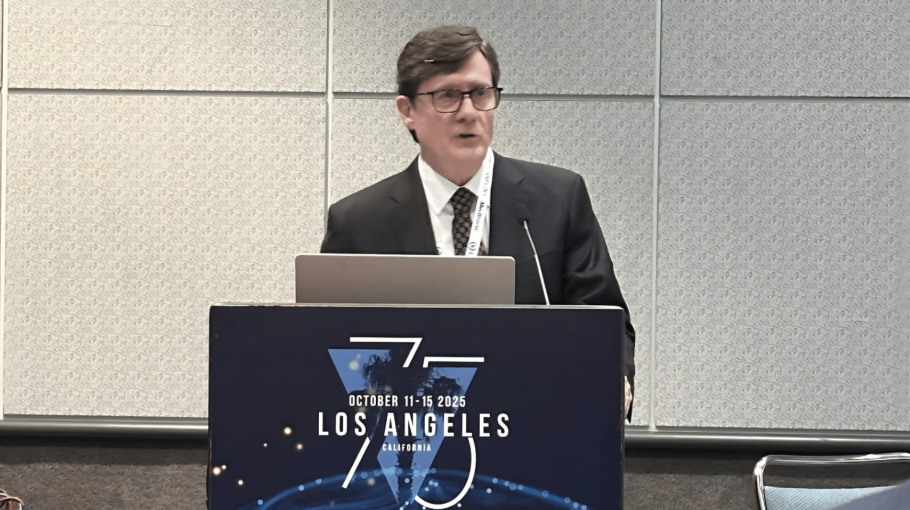
Dr. McCormick was invited to present his experience on the evaluation and microsurgical management of intramedullary spinal cord tumors. Dr. McCormick described his techniques and illustrated on video the safe and complete microsurgical resection of both an...