
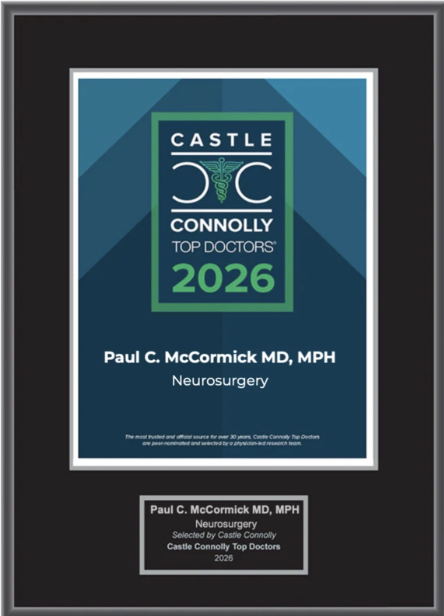
Dr. McCormick named as one of Castle Connolly’s Top United States and New York Doctors/Neurosurgery for 25 consecutive years.
| Header | Text |
| Summary | Ewing = James Ewing (1866-1943), who first described this type of cancer Ewing sarcoma is a cancer of the bones or soft tissues. It is most common in the pelvis and the large long bones of the arms and legs, but it can also occur in the other bones of the limbs, the neck, clavicle, ribs, and spine. At the Spine Hospital at the Neurological Institute of New York, we specialize in treating Ewing sarcoma of the spine. Ewing sarcoma is sometimes also called Askin tumor or peripheral primitive neuroectodermal tumor. |
| Symptoms | Ewing sarcoma of the spine often causes pain at the site of the tumor, followed by a palpable swelling. If the tumor grows large enough to compress the spinal cord, neurological symptoms such as weakness, clumsiness, or tingling may develop in the arms and legs. Metastatic disease (a spread of the cancer) may cause fever and weight loss. |
| Causes and Risk Factors | The overall rate of Ewing sarcoma in the United States is 1 case per 1 million people each year. Most patients are under 20 years old. Ewing sarcoma is slightly more common in males than females, and much more common in individuals with Caucasian ancestry than individuals with other ancestry. A specific chromosomal translocation (a type of genetic mutation) is found in the cells of approximately 95% of Ewing sarcomas. However, the cause of this translocation is not known. . |
| Tests and Diagnosis | Ewing sarcoma is a rare disease. It can occur anywhere in the body and its symptoms are nonspecific, or similar to the symptoms of many other problems. This disease is often misdiagnosed at first. X-ray, MR (magnetic resonance) scan, CT (computed tomography) scan, PET (positron emission tomography) scan, bone scan, and biopsy all help to diagnose Ewing sarcoma.
|
| Treatments | Ewing sarcoma is treated with a combination of chemotherapy, surgery, and sometimes radiation therapy. The goal of surgical treatment is complete tumor removal. Depending on the location of the tumor, different portions of the vertebrae may need to be removed. To maintain spinal stability after diseased sections of bone have been removed, it is usually necessary to perform an instrumented spinal fusion. Surgery for Ewing sarcoma of the spine should be performed by experienced cancer surgeons who specialize in spinal tumors. |
| Preparing for Your Appointment | Drs. Paul C. McCormick, Michael G. Kaiser, Alfred T. Ogden, Christopher E. Mandigo, Patrick C. Reid and Richard C.E. Anderson (Pediatric) are experts in treating Ewing sarcoma of the spine. They can also offer you a second opinion. |
Helpful Surgery Overviews
Dr. McCormick will choose the treatment method specific to each patient and situation. Some of the condition’s treatment options may be listed below.
Recent News
Dr. McCormick named as one of Castle Connolly’s Top United States and New York Doctors/Neurosurgery for 25 consecutive years.
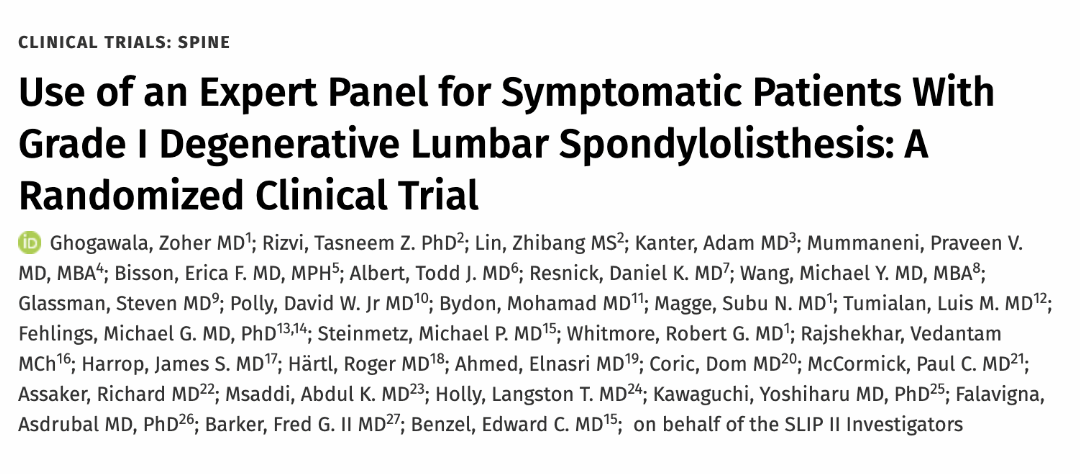
Dr. McCormick participated as both a member of the expert panel as well as a co-author of recently published randomized study on the treatment of grade 1 degenerative spondylolisthesis. This condition commonly occurs in adult patients and is subject to numerous types...
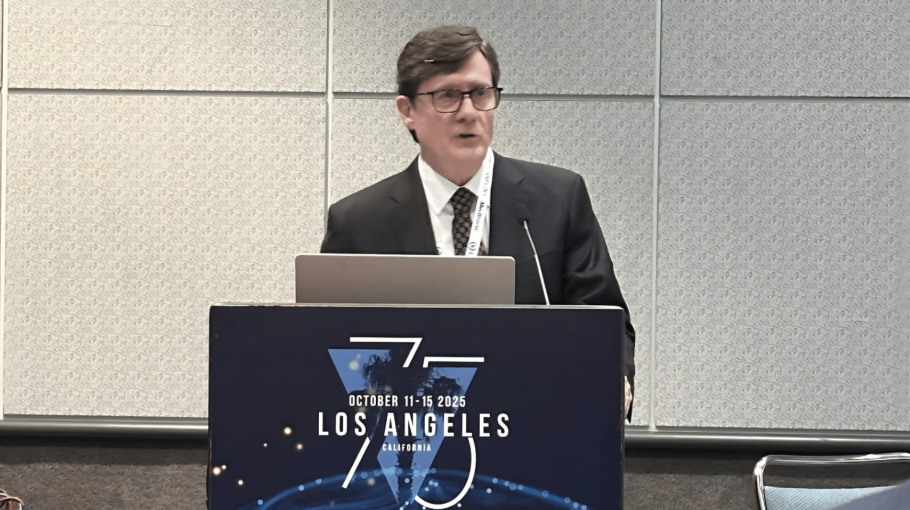
Dr. McCormick was invited to present his experience on the evaluation and microsurgical management of intramedullary spinal cord tumors. Dr. McCormick described his techniques and illustrated on video the safe and complete microsurgical resection of both an...