

Dr. McCormick named as one of Castle Connolly’s Top United States and New York Doctors/Neurosurgery for 25 consecutive years.

| Header | Text |
| Summary | Giant cell = a type of cell formed when individual cells merge A giant cell tumor (GCT) of bone is a benign (noncancerous) bone tumor that typically develops near the joints of the knee, wrist, shoulder, or spine. At The Spine Hospital at The Neurological Institute of New York, we specialize in giant cell tumors of the spine.
Bone tumors are classified as primary or secondary. Primary bone tumors arise originally from bone tissue, while secondary bone tumors have spread to the bone from a tumor elsewhere. GCTs are primary bone tumors. In the United States, GCTs make up about 5% of all primary bone tumors. The benign nature of GCTs means that they tend not to spread. Rarely, however, they do spread to the lungs. But even this spread is usually “benign”: the tumor does not spread anywhere else in the body, and can be removed successfully from the lung. It is possible, but rare, for GCTs to become malignant (cancerous). Giant cell tumors get their name from a type of cell in the tumor. “Giant cells” form when many other cells merge. They are also found in other bone tumors, as well as in normal bone. But a giant cell tumor has many of these giant cells intermixed with more typical cells. |
| Symptoms | One common symptom of a spinal giant cell tumor is pain at the tumor site. Other symptoms may occur if the tumor compresses the spinal cord or spinal nerves. In the sacrum, GCTs may cause bowel or bladder incontinence, leg weakness, or sexual dysfunction. At the other spinal levels, symptoms vary depending on the tumor’s location and size. They may include arm or leg weakness, numbness, tingling, or bowel or bladder dysfunction. Occasionally, a tumor can weaken a vertebra to such an extent that the vertebra breaks after a relatively minor trauma. This is called a pathologic fracture. |
| Causes and Risk Factors | The causes of giant cell tumors are not well understood. They do not run in families, and there are no known environmental risk factors. Giant cell tumors are more common in women than in men, and generally occur in the third and fourth decade of life. |
| Tests and Diagnosis | Giant cell tumors can be identified on several types of imaging scans:
A CT-guided needle biopsy may help confirm the diagnosis, which helps in treatment planning. In a needle biopsy, a hollow needle is inserted through the skin into the tumor. The needle is used to remove a sample of tumor tissue, which can be analyzed in a laboratory. Needle biopsies of spinal giant cell tumors are done with CT guidance to ensure the safety of surrounding structures, like spinal cord and nerves. |
| Treatments | Though GCTs are benign tumors that do not usually spread, they are sometimes described as locally aggressive. This means that they invade and destroy surrounding bone tissue, and they tend to recur after treatment. Complete surgical removal gives the best chance of avoiding recurrence, and is the treatment of choice for giant cell tumors whenever possible.
Spinal fusion and stabilization with metallic implants is often performed following complete tumor removal. |
| Preparing for Your Appointment | Drs. Paul C. McCormick, Michael G. Kaiser, Peter D. Angevine, Alfred T. Ogden, Christopher E. Mandigo, Patrick C. Reid and Richard C.E. Anderson (Pediatric) are experts in treating spinal giant cell tumors. They can also offer you a second opinion. |
Helpful Surgery Overviews
Dr. McCormick will choose the treatment method specific to each patient and situation. Some of the condition’s treatment options may be listed below.
Recent News
Dr. McCormick named as one of Castle Connolly’s Top United States and New York Doctors/Neurosurgery for 25 consecutive years.

Dr. McCormick participated as both a member of the expert panel as well as a co-author of recently published randomized study on the treatment of grade 1 degenerative spondylolisthesis. This condition commonly occurs in adult patients and is subject to numerous types...
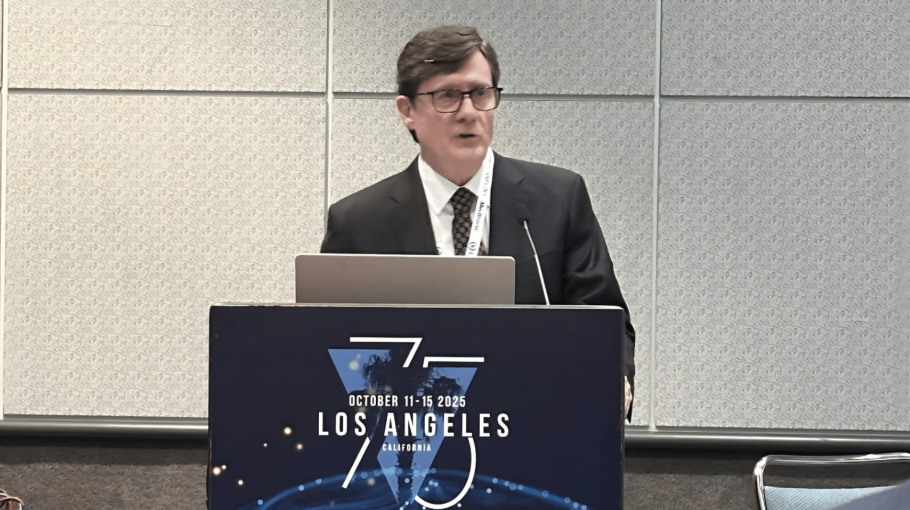
Dr. McCormick was invited to present his experience on the evaluation and microsurgical management of intramedullary spinal cord tumors. Dr. McCormick described his techniques and illustrated on video the safe and complete microsurgical resection of both an...